Every once in a while you come across something unusual…
… in our increasingly homogenous world where there is almost nothing unique. Off-the-wall and different and quirky have become rare, few and far between…
… it’s a delight to find something that is genuinely unique. Something that makes you stop and think. Take a second look.
En passant, you will welcome confirmation that it is possible for real brains, not artificial, to create, make a life’s work and dig into something we think we all know about…
… only to discover and make us realise, we know nothing.
Something as familiar as Christmas and the birth of Jesus. We know the story; no room at the inn, the mystery, the Wise Men, Herod.
All of which remain heavy metaphors for today’s mothers, children, poverty and child abuse.
Not just Christians. Several other religions and ancient mythologies feature miraculous birth stories for their saviours, messiahs, or figures of mystery.
Their tales often use supernatural elements… divine intervention, prophetic dreams, or virgin birth… to signify the child’s exceptional destiny and divine connection.
- Buddhism,
- Hinduism,
- Zoroastrianism,
- Egyptian Mythology and the birth of Horus, and
- in Greco-Roman Mythology…
… all have figures that were said to be born from the union of a god and a mortal woman.
Taoism, in which some schools believe Laozi was conceived when his mother gazed upon a falling star. He was allegedly born as an old child with a full grey beard after being in the womb for decades…
… I bet that made a mess of the birthing schedules.
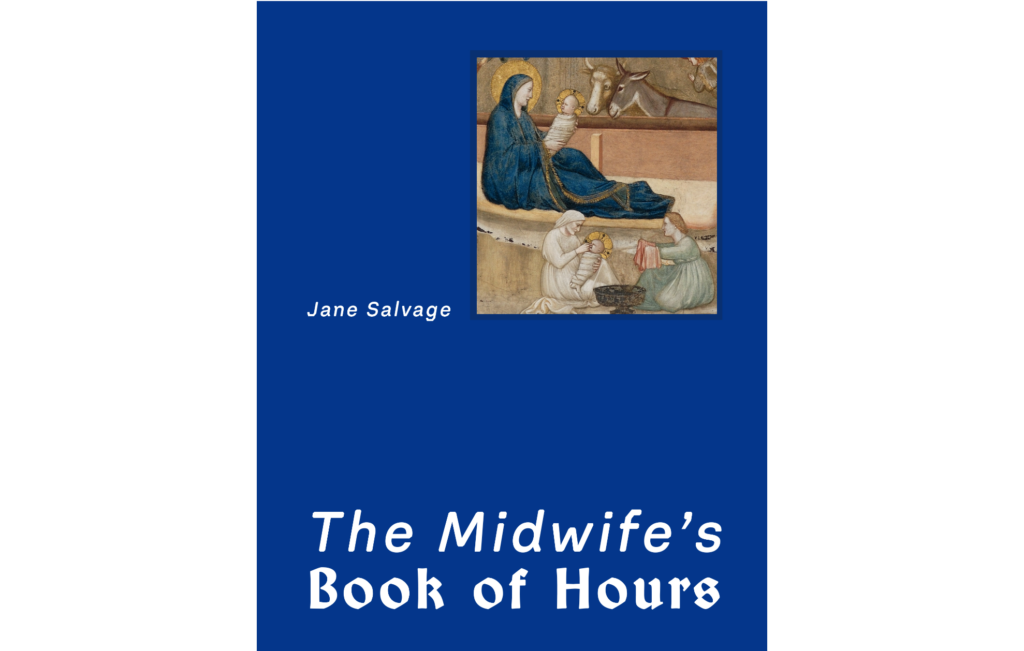
Anyway, my refreshingly new discovery … it’s a book about the most important people involved in the tale of the nativity…
… well, perhaps not the most important, that would have to be the divine child, nevertheless…
… the midwife! Of which there are now a record of just under 25,000 in England.
Midwives sit at the heart of maternity services — something repeatedly highlighted in debates about workforce pressures and retention across the NHS, as discussed in Roy Lilley’s commentary on the growing pressures on the NHS workforce.
… the midwife, centre stage in the BBC’s tear-jerker, Call the Midwife.
… the midwives, of which there were two, present just after the birth of the Christian messiah, Jesus;
Zebel and Salome…
… they arrived too late at the Bethlehem stable. Mary had given birth to Jesus alone. Where’s the CQC when you need ’em?
Zebel was an instant believer that the Messiah had come, but her colleague…
Salome wasn’t so sure. She decided to examine Mary, as any professional midwife would…
… and suffered instant, painful punishment. Her hand caught fire and dropped off. Then she was healed by touching Jesus. His first miracle.
In the history of art and iconography the presence of midwives, at the birth of Christ and other saints, is secured in frescoes and altar pieces. Painting after painting.
Midwives at the birth of Christ were excluded from the standard Bible because they failed to meet the strict criteria established by the early Church for God-breathed scripture.
Yet in art we see them bathing, wrapping in swaddling, carrying heavy symbolic references only to become embroiled in fierce theological debates.
The book I am talking about is The Book of Hours by Jane Salvage, herself a global leader of nurse and midwifery policy.
Her book is full of unique facts and stories and richly illustrated with the pictures of the familiar scene we take for granted. Not realising there are midwives portrayed…
… no one ever mentions the midwife!
For students of classical art, this book is more than worth its modest price, with a global collection of images from as diverse a source as Philadelphia, Venice, Dijon, Washington, Madrid and Long Melford, England (!). Pages and pages, more.
The book and its scrumptious images are arranged around eleven chapters;
- witnessing,
- delivering,
- arriving,
- sinning,
- healing,
- caring,
- storytelling,
- worshipping,
- treasuring,
- fleeing,
- surviving and
- reviving.
Stories and explanations woven around pictures, carvings and ancient prayer books.
All of which are ready-made PowerPoint headings for the midwifery of today… and probably will be.
Witnessing and delivering, treasuring a new life into a turbulent world. Fleeing, healing and surviving.
At a time when maternity services and safety remain central to NHS debate — including discussions about staffing, training and service pressures highlighted in analysis of maternity safety and NHS service pressures — this historical perspective adds a surprising cultural depth to the profession.
If you are a midwife, this book is for you.
If you know a midwife, this book is a gift for them.
If you are an aficionado, or student of art, this book is a must-have.
If you do healthcare, this is a novel read.
This wonderful book meets us at the intersection of midwifery, a foundation stone of the NHS. Curiosity about history and the heritage-art of the world, and the progress of healthcare.
This book resonates with the challenges women worldwide face today as mothers, midwives and leaders.
If you’re a born-again pagan, don’t worry.
If you have no interest in art, relax.
If you know nothing about midwifery, so what.
If you delight in the unusual, the unique and intriguing…
… this really is a cuppa-builder’s read for you.
You can buy it here.
——oOo——
Have the best weekend you can.
News and Comment from Roy Lilley
Contact Roy – please use this e-address roy.lilley@nhsmanagers.net
Reproduced at thetrainingnet.com by kind permission of Roy Lilley.
Related
Discover more from The Training Network
Subscribe to get the latest posts sent to your email.