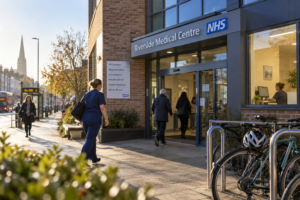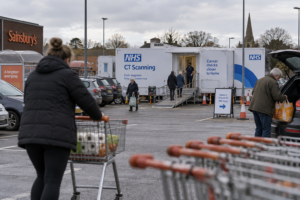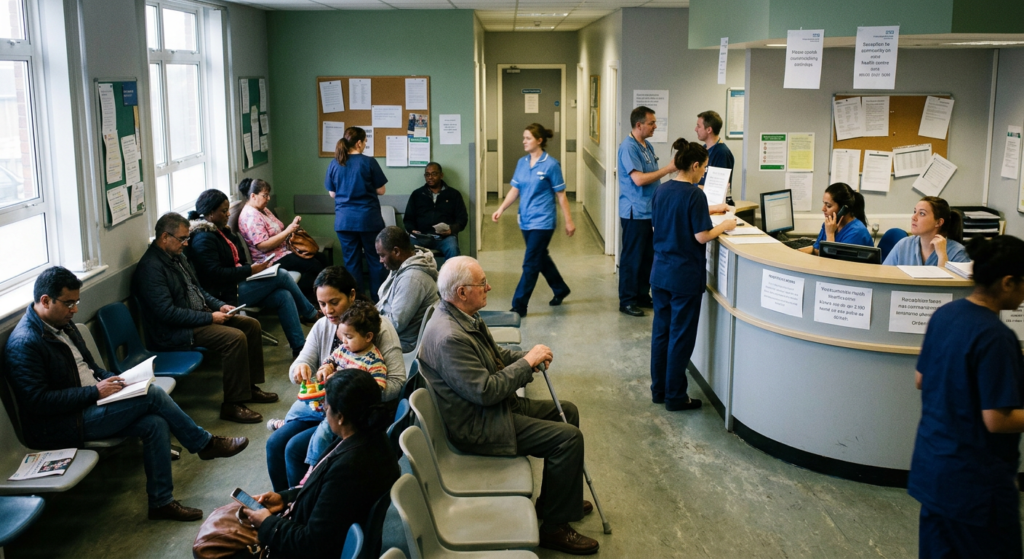
The NHS is going to move care out of hospitals and into the community.
Yippee!
Neighbourhood Health and NHS Neighbourhood Health is the EIGTH major attempt to achieve the great NHS left shift…. stretching back more than 60 YEARS.
NHS Neighbourhood Health is crucial for the future of healthcare in our communities.
As we discuss NHS Neighbourhood Health, it’s essential to consider its impact on local healthcare services.
NHS Neighbourhood Health and Community Care
- 1976 priorities, promised more emphasis on older people, mental health and community services.
- 1990 NHS&Community Care Act ; help people remain in their own homes.
- 2000 NHS Plan; intermediate care, hospital-at-home services and 500 one-stop primary-care centres.
- 2006, Our Health, Our Care, Our Say; radical shift of services and resources out of hospitals.
- 2014 Five Year Forward View, Vanguards
- 2019 Long Term Plan; to finally dissolve the divide between primary and community services.
- 2022 Fuller Stocktake; integrated neighbourhood teams.
None has achieved the promised national, rebalancing of care.
Hospitals consume the lion’s share of NHS investment. Primary, community and social care have struggled for money, staff and capacity.
For anyone with half a brain-box, EIGHT attempts should tell us something…
… bashing-on, with a new name, is just not grown-up.
HMG’s own impact statement tells us all we need to know. ..
… a full assessment of costs and benefits was not feasible, the evidence is partial and the scale of the likely impact is difficult to assess…
… successful integrated-care schemes have taken between two and six years to reduce hospital use, and …
Transitioning to NHS Neighbourhood Health requires careful planning and resources.
Understanding the goals of NHS Neighbourhood Health is vital for community engagement.
… improvements disappeared when additional funding ended.
DH++, has taken a policy almost as old as the NHS, full of misgivings, given it a neighbourhood label and decorated it with numbers that can’t be proven.
Seriously, they can’t…
The success of NHS Neighbourhood Health will depend on collaboration among various stakeholders.
The Neighbourhood Health Framework comes festooned with reassuringly round numbers.
- 10% reduction in admissions and bed-days.
- 10% improvement in clinical outcomes.
- 10% reduction in follow-up appointments.
- 25% outpatient referral-diversion rate.
- 90% of clinically urgent GP patients dealt with on the same day.
- Care plans for 95% of people with complex needs.
So, ten, 25, 90, 95 percent…?
They create the comforting impression that someone, somewhere, has done the calculations.
Where are they?
Where are the baselines, workforce assumptions, capacity models, costs and implementation curves demonstrating these results can be achieved, nationally?
They don’t exist.
When the 90% urgent-GP target was announced, the NHS did not measure or publish a national data set.
Only now, practices are being told how to record it, and each practice decides which patients are clinically urgent.
Only about 20% of people with long-term conditions currently, have a care plan… the target is 95%.
Ministers have admitted they don’t know what ‘complex needs’ means, how the plans will be delivered and who will coordinate them.
A target population has not been defined.
The 25% referral-diversion figure has already started to unravel.
NHSE says there’s no national diversion target… it’s merely an estimate of the patients who might be managed without a hospital appointment.
Good luck with that!
It’s a guess, dressed-up as a target…subsequently undressed as an estimate… revealed as naked folly.
NHS Neighbourhood Health initiatives should focus on preventive care to reduce hospitalisations.
That’s not evidence-based policymaking. It’s policy laundering.
This is another, nailed-on, national policy with failure, designed-in from the beginning.
Community care does not necessarily replace hospital care and hospital costs come in large, stubborn lumps. Activity may move. The costs stay behind, and…
…community capacity must be created before hospital capacity can safely be reduced.
For several years, both have to run together.
That requires double-running money, extra staff and political willingness to close or shrink hospital services once alternatives are working.
Challenges remain for NHS Neighbourhood Health that must be addressed to ensure effective implementation.
Successive governments have provided none of them at sufficient scale.
This 8th attempt will fare no better.
If this were a health insurance company, it would be an undeliverable swindle. A director or two might expect a ten stretch for fraud.
Is there an alternative?
We could start by funding services, not organisations.
NHS Neighbourhood Health represents a shift in how care is provided to the public.
Engaging the public in discussions about NHS Neighbourhood Health is essential for success.
Shift primary-care funding from the present, measly 8.3% back to the 2005/06 level of ~11%.
Neighbourhood Health is a busted old policy, wearing a new badge, carrying numbers nobody has proved and heading towards a failure everyone can see coming but no one will speak up.
If the DH++ knew anything about operational services, and even had a hint of corporate memory, right now…
… they’d pull the plug.
Ultimately, the vision for NHS Neighbourhood Health is to create a more efficient healthcare system.
Realising the full potential of NHS Neighbourhood Health relies on adequate funding.
News and Comment from Roy Lilley
Contact Roy – please use this e-address roy.lilley@nhsmanagers.net
Reproduced at thetrainingnet.com by kind permission of Roy Lilley.
We must evaluate the long-term effects of NHS Neighbourhood Health on patient outcomes.
Related
Discover more from The Training Network
Subscribe to get the latest posts sent to your email.