The Budget, the Autumn Statement… they are so much more than a collection of numbers…
… they are the expression of our values, what we care about and what is important to us.
Or, they should be.
There are some blunt home truths that we have to accept… in the file marked, ‘we are where we are’.
Brexit has damaged the economy. Whatever hope there might be about the great red, white and blue yonder, it’s hit the economy.
We aren’t over it.
Covid, its cost and impact… a fortune and…
We aren’t over it.
We are at war with Russia. Our young men and women aren’t on the front-line, but the young men and women who are, are armed with weapons supplied by us… and it is costing a fortune.
They aren’t over it.
The hits to our economy, world trade, commodity prices, inflation, shortages and all the rest…
… we are nowhere near over it.
For millions of working families, hardship is still the uninvited cousin that has overstayed a welcome.
Kids do turn up at school with nothing inside them.
All the moving parts of the Bank of England’s November economic forecast shifted in the wrong direction and the odds of a technical recession before the end of 2024 are now thought to be around 50:50.
October data from the Joseph Rowntree Foundation found that one in six families (1.9 million in total) have turned off their fridge or freezer since April 2021 in order to reduce their energy costs.
If that’s not a proxy indicator for ‘just getting by’, I don’t know what is.
Let’s have a look at Chancellor Hunt’s handiwork.
He says it’s all about growth and he has taken steps to encourage companies to go for it.
Good.
Cuts in National Insurance contributions helps companies as well as workers…. and helps the NHS and social care.
But it’s a long-term gamble.
The Office for Budget Responsibility forecast growth expected to be 0.6%… to be honest, so small, a rounding error!
Higher than expected tax receipts, because of inflation, means The Chancellor is on course to reduce debt in 2028/9.
Public services…
… he is sticking to the plans made in 2021, which looked generous then but inflation has eroded their value, today worth about 1.9%, running to 2024/5. This takes us back to the Osbourne austerity numbers in the ten years following the world banking crisis.
We know the damage that did.
Hunt set out a public sector target for a 0.5% productivity increase per year. To be honest, most FDs will be able to fiddle the numbers to make that look right.
But…
… capital budgets will be flat in cash terms beyond 2025, which means, taking into account inflation the value falls in real terms and we’re stuck with a crumbling estate, insufficient kit, and inadequate IT systems.
The OBR forecasts; public sector net investment will fall to 1.9% of GDP in 2027/28.
If (when) Labour are elected next May (or October), they’ll have to soldier-on or put-up taxes.
They say they’ll borrow millions and have a bonkers plan to fund everything from taxing non-doms. There’s only 500 of them who have ‘move the dial’ wealth, and they’ll be long-gone.
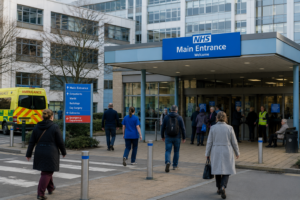
The upshot for the NHS?
There are some more blunt, home-truths that we have to accept… in another file marked, ‘we are where we are’…
… neatly encapsulated in this billet-doux from NHSE;
‘… our agreed priorities are to achieve financial balance, protect patient safety and prioritise emergency performance and capacity, while protecting urgent care, high priority elective and cancer care…’
Ignoring the fact there are seven ‘priorities’ in one sentence and which one is the ‘priority’… in plain English I think they’re saying; ‘do more of everything, with less’.
‘… we are asking systems to complete a rapid two-week exercise to agree actions required to deliver the priorities…’
This invites more creative nonsense, fairytales and bull-$%&t from FDs.
‘…ICBs and providers… to agree the steps required to live within their re-baselined system allocation…’
They can’t.
This memo was written for the benefit of the DH+, it’s called kissing-up and kicking-down.
The NHS budget next year is set to flatline; it will be nearly £4bn below where it would have been if increases promised before Covid continued…
… and that is another blunt home truth that we have to accept… in the file marked, ‘we are where we are’.
If budgets are the expression of our values, what we care about and what is important to us…
… so are memos.
Have the best weekend you can.
Related
Discover more from The Training Network
Subscribe to get the latest posts sent to your email.