As sofa moments go, it was right up there…
One goal difference, a fleeting moment of history, etched forever on a trophy and our memories.
I well remember watching the 1966 World Cup.
A flickering black and white telly with an aerial draped around a coat hanger, hanging from a picture rail.
Most of you reading this won’t have a clue what all that kit was. I’ll just add, it was a portable telly (it had a handle on the top), weighed a ton and was state-of-the-art.
It never occurred to me I might meet my maker without seeing our nation win the world cup again. I’m doing my best to hang on!
Now the talk is how women footballers are being treated.
Nike are not selling replica Mary Earps goalkeeper shirts, despite her winning the Golden Gloves award for keeper of the tournament.
So, if you are thinking of buying any sports kit, make sure it’s not Nike. If you are having to fork-out for back-to-school shorts-n-stuff, don’t buy Nike.
Boycott Nike… it’s what they deserve. Earps has launched her own brand… buy that.
And, there’s the money thing. Equal pay. The chief of the numpties who run world footie is Gianni Infantino, he said;
‘…women have the power to convince us men what we have to do…’
I don’t think any of us would take much convincing that we need some new numpties.
Add to that neither;
- Stuart Andrew (minister for Sport),
- Rishi Sunak, this week’s PM,
- the Prince of Wales (President of the FA),
- nor HRH Charles, King…
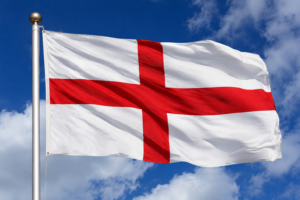
… could be bothered to get on a plane and wave the flag, is insulting.
Charmer missed a trick. He is focussed on showing us what a ‘good-bloke’ he is and…
… how Labour understands the working man (and woman). An economy round-trip would have put him right in the frame.
The money thing is really interesting.
Football is a business and survives on the income from ticket sales and advertising, which is made more valuable by exposure on TV, from which derives more money.
Men’s football attracts advertisers for things which most of us probably wouldn’t think were great role-products for our kids… beer and betting (on the way out).
Plus sports-kit companies who charge impossible, eye-watering, rip-off amounts of money for replica shirts.
Add to that a secondhand car dealer, an airline and some mystery software companies.
Heaven knows what the rationale is. The likelihood of influencing buying decisions seems pretty slim.
You either like Budweiser or you don’t and the stadiums are packed with people who are more likely to buy a holiday ticket to Portugal than they are the Emirates.
Who buys engine oil these days? Castrol are wasting their money and procurement for software products? No one understands it.
The simple truth is men don’t buy very much, women do.
- Over 80% of purchases and purchase influence are made by women
- Women are the primary grocery shopper
- Women drive the global economy…
- … controlling about $31.8 trillion in consumer spending.
- Women make the majority of daily household expenditure decisions.
- On larger financial decisions, such as booking a holiday or finding a mortgage, research shows that two-thirds of men and women say they make these together.
Women are far more likely to influence spending.
That means women’s football is a whole new area of advertising to explore.
A shirt with Tesco, Asda, Halifax, BP, Ford, Dove or L’Oréal is much more likely to yield recognition and revenues than Standard Charter or Umbro.
Women have long been the primary target of many marketers, not just because they make up roughly half of the entire world’s population, but because of their sheer buying power.
I can see revenues from the women’s game outstripping men’s football, simply because of women’s influence over buying decisions.
If there is a god of fairness, women footballers should be paid a shed-load more than men.
Where does this leave us? It should leave us thinking about us.
- The majority of people the NHS cares for are women.
- The majority of carers are women.
- The majority, three-quarters of the workforce, are women.
Women are substantially underrepresented (37%) in senior positions across the NHS.
The NHS is not woman-friendly and the whole thing looks like an own goal.
We need to fix this and it is no place for numpties.
News and Comment from Roy Lilley
Contact Roy – please use this e-address roy.lilley@nhsmanagers.net
Reproduced at thetrainingnet.com by kind permission of Roy Lilley.
Related
Discover more from The Training Network
Subscribe to get the latest posts sent to your email.