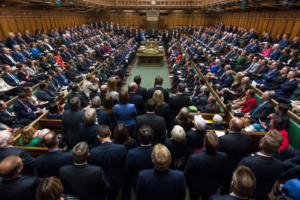
The procession, through London, the Royal Navy Ratings pulling the gun carriage, bearing Queen Elizabeth’s coffin, was over a mile long.
The tradition of sailors pulling the monarch’s carriage at state funerals began;
‘… after an accident on the day of Queen Victoria’s final journey. Part of the harness broke and a Navy detachment stepped in, improvised ropes, and took over the task.’
There was no such drama on Monday.
The early morning slate grey skies gave way to a glimpse of the sun. Millions watched the procession go by.
The end of an era, a turning point, a change, a journey, vicissitude another page in our nation’s history?
Whatever change King Charles III may, or may not bring, some things appear to be stubbornly the same.
Some issues, grinding, inexorably to a conclusion, we are left to watch happen, in slow motion.
No matter how loud the warning, how authoritative the siren voices, we are deaf to the inevitability of gradualness.
The World Health Organisation has never seemed to have achieved the authority is deserves. Traduced by Trump, ignored by Johnson and an inconvenience for many governments around the world.
WHO reports go unread, ignored, filed, and put on a shelf.
They have a new report that I fear No21 (Therese Coffey), with her penchant for punctuation but unable to see the point, is unlikely to read. It’ll be stuck in the pile of, ‘the too difficult’.
The report is a ticking time bomb, a hazard warning, a pulsing red light. If we don’t ‘do something’ our health systems will collapse, health outcomes will be unpredictable, bad, preventable deaths increase and long waiting times for treatment will get longer.
WHO tell us what we know; the European Region faces severe problems with their health and care workforce…
…but I had no real feel for just how bad it is and will get. I am in no way certain there is a government response that can deal with it.
The report tells us;
‘…many countries face staff shortages… the situation is concerning… efforts to replace retiring health-care workers are suboptimal…’
Suboptimal… in plain English… piddling.
Europe’s health and care workforce is growing older. The figures are especially staggering when it comes to doctors. In 13 of the 44 countries with available data(!), at least 40% of doctors are aged 55 or older…
‘… nowhere is the maturing of the physician workforce as pressing as in Italy, where over 56% of doctors are aged 55 or older.
Elsewhere in the EU, the ageing workforce is also notably high in Latvia, Estonia, Hungary, Germany, Bulgaria, France, Belgium, Luxembourg and Lithuania.’
The shortage of graduates has created a mobile workforce.
Doctors can work where they like. Doctors and nurses from Romania, moving to work in higher-income countries like France, Italy and Spain… creating ‘medical desserts’.
Just for good measure;
‘… made worse by…lack of strategic planning, informed by sound analysis… exacerbated by a lack of data and information to plan effectively…’
Sound familiar?
The UK?
- The doctor density is well below the regional average… along with Ukraine and Moldova.
- Nurses? We rate alongside Malta and Czechia.
- Midwives? We partner Belarus in the league table.
- Dentists… it’s us and Slovakia.
- Pharmacists, we are above average, but it’s a ‘low average’, with Albania and Latvia.
- Physiotherapists? Albania has more than us.
Nearly a quarter of our nurses are over 55yrs and we are training about the same numbers of nurses as Israel and Iceland.
Germany, Spain and us, were the main countries of destination, in absolute terms, for foreign-trained doctors and nurses in 2020.
In another study;
‘...Two-thirds of trainee GPs in England plan to work part-time.’
Terrific.
Is there any good news? Yes, The Netherlands has fewer shortages of nurses…
… their work arrangements give nurses an expanded role and more autonomy in organising and managing the delivery of their services…
… we don’t do that.
Hospitals in Germany adopted family-friendly measures; providing childcare support, putting in place flexible working hours…
… we don’t do that.
The report’s recommendations include creating working conditions that promote a healthy work-life balance, to both attract and retain workers, as well as bolstering the use of digital tools to support the workforce…
… we have neither a workforce plan nor a deliverable digital policy.
Nothing’s gonna change, is it?
News and Comment from Roy Lilley
Contact Roy – please use this e-address roy.lilley@nhsmanagers.net
Reproduced at thetrainingnet.com by kind permission of Roy Lilley.
Related
Discover more from The Training Network
Subscribe to get the latest posts sent to your email.