Capital.
I know you’re in holiday mood but I don’t mean London, Paris or Rome.
I mean capital as in wonga, spondoolicks, cash.
The NHS has two forms of money, revenue and capital.
Revenue pays the bills and the wages and what-not.
Capital is used to buy everything that lasts longer than a year, or to repair stuff and is top-sliced by the DH+ for various research projects.
There’s not enough capital about. There hasn’t been for quite some time.
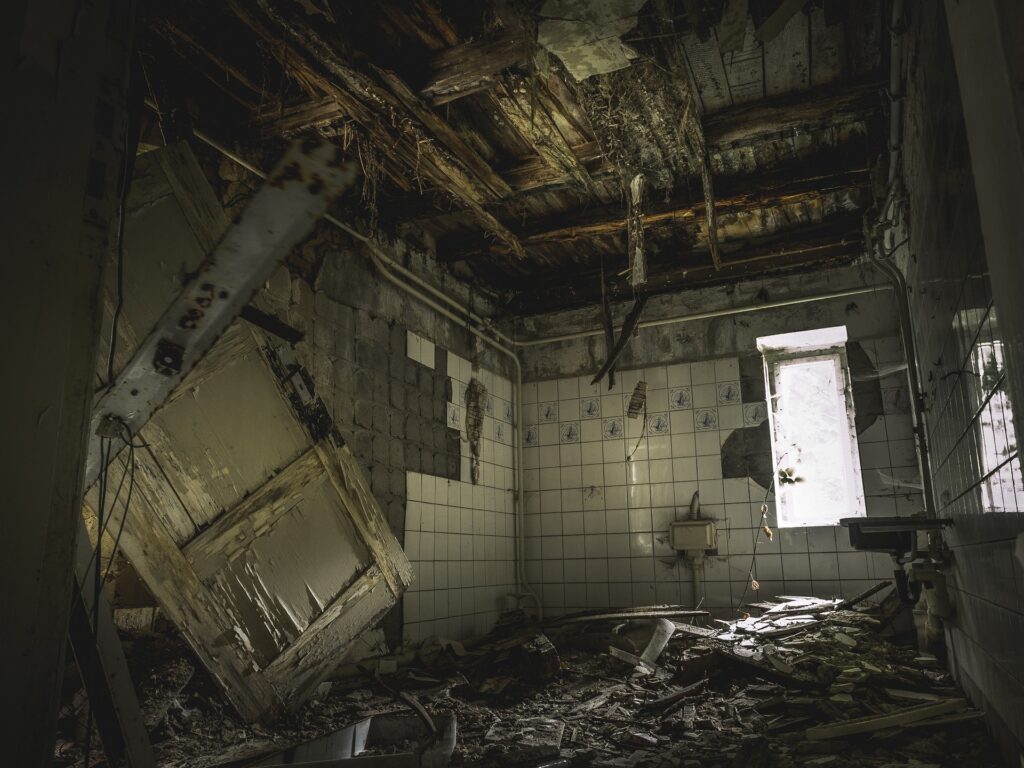
That’s why there’s a £10bn backlog of repairs and renovations, why hosptials are being held up with scaffold poles and the accumulation of goodness knows how much risk with under maintained kit-n-caboodle.
Accountants have a word for it; unfunded-depreciation. Ok, two words. I have one word for it… neglect. Make that two… criminal-neglect.
The Health Foundation’s excellent report on ‘capital’ makes a lot of very hard hitting points.
Here’s a selection:
- Since 2010/11, capital spending has declined by 7%.
- Mostly explained by transfers, by the DH+, from the capital to the revenue budget, to fund day-to-day running costs.
- We spend about half the share of GDP on capital, compared with similar countries, and far behind other countries in numbers of MRI and CT scanners per capita.
- The DH+ capital budget spent by Trusts fell 21% between 2010/18, that’s when the real damage was done.
- There’s a 17% fall in the value of capital-per-worker since 2010/11.
- Sales of NHS capital assets (land and buildings)have risen significantly since 2015/16, the proceeds have been converted to revenue, to cover day-to-day costs.
- Current capital-spending levels are leading to declining values in plant and machinery in trusts and the £10bn and growing, maintenance backlog.
And here is a very important bit;
‘… Health Foundation finds… capital-funding constraints have a direct, negative impact on [Trusts] ability to deliver optimal care.
Staff … reported negative effects on productivity from … equipment shortages and failure…. ageing diagnostic equipment … is negatively affecting the ability of clinical staff to perform their work.
… the built environment is having negative effects on patient care and safety.’
The upshot is… people are fed-up, working in run-down dumps that are probably dangerous.
Well, fear not some bight-spark at NHSE has a solution.
A competition!
As the excellent HSJ reports;
‘…Trusts ‘over-delivering’ on two emergency care targets this winter will be awarded a share of a new £150m capital fund…’
The thresholds are to achieve;
- An average of 80% against the 4hr A&E target in quarter four, 2023-24
…and…
- To complete at least 90% of ambulance handovers within 30 minutes, during quarters three and four.
However, the facts are;
- The 2023-24 planning guidance set trusts a 76% target for four-hour performance…
- …only 5 have got above 80% in the latest quarter.
- There’s no specific targets for ambulance handovers, however…
- …in June, 90% of handovers took about three quarters of an hour.
So we have a new style of management at NHSE. Management by game-show. What shall we call it?
Whitehall Wipeout?
If your local Hosptial misses out, we could call it the Wheel of Misfortune.
The Price is Wrong? Who Wants to be a Millionaire, doesn’t quite do it.
NHSE, The Weakest Link, sounds about right.
As a member of the public I don’t want my taxes distributed by a comedian. Points do not mean prizes.
Pounds means Patients… every one of them, every shilling, carefully targeted to improve services where it is needed most.
I want careful allocations, aimed to do the most good.
I do not want the five high performing Trusts to be given more money.
I want them to share their techniques and approaches to the most struggling Trusts, where we should pin-point capital allocations to help the most.
Competition and the pressures it will create, takes us back to everything that was bad when the NHS disgraced itself with Mid-Staffs.
Competitions, pressure, bullying and everything that is ugly.
Struggling Trusts, who through no fault of their own will miss out on the lifeline of capital and the spiral downwards will continue.
Sharing, showing, helping, developing and investing is the kind of management the NHS needs. Not cack-handed, thoughtless thuggery from the Neanderthal days of ‘grip and growling’.
A competition involving complex service components which are not entirely in the control of Trust managers is centralist.
Tells me leadership is ignorant and bankrupt of ideas. It looks to me like the capital programme needs to start again, with a blank piece of paper, new priorities, a recalibration about what it important to us.
Beat the Clock, Deal or No Deal has no place in the NHS boardroom.
It is Jeopardy and Pointless.
News and Comment from Roy Lilley
Contact Roy – please use this e-address roy.lilley@nhsmanagers.net
Reproduced at thetrainingnet.com by kind permission of Roy Lilley.
Related
Discover more from The Training Network
Subscribe to get the latest posts sent to your email.