Let’s start the day with Gandhi…
Mahatma Gandhi.
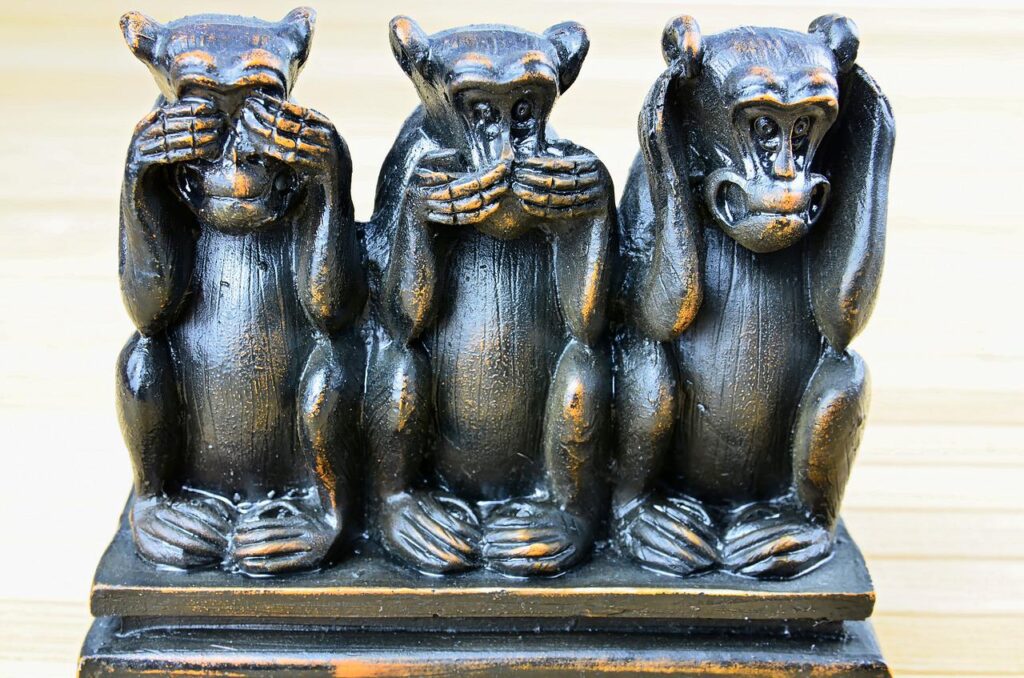
He borrowed from a 17th century phrase; ‘See no evil, hear no evil, speak no evil’. The three wise monkeys.
The derivation isn’t clear. The monkeys are thought to have been brought into Buddhism by a monk in the 7th century.
According to the legend, this monk, Xuanzang, while he was travelling, was escorted by a monkey. However, he may not be the one who invented the other two… they might have been borrowed from the Analects of Confucius.
There are other legends that the monkeys come from Japanese, Koshin beliefs…
… based on the idea that, in every human being, there are three wicked worms, the Sanshi. Every sixty-days they leave our body, to report on our sins, to a superior entity.
Who knows where legend stops and reality begins?
It is with acknowledgements to whomsoever, that I bring the three monkeys up to date.
Three monkeys who see no poverty, hear nothing about poverty and speak rubbish about poverty.
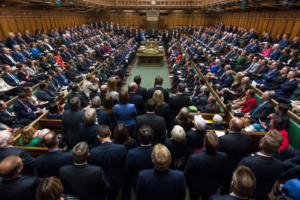
They are all members of parliament;
- Lee Anderson
- George Eustace
- Rachel Maclean
Now, here is my dilemma.
Do I get into the weeds of what they’ve said, here, here and here and expose them for the totally stupid people they are?
Or…
Do I accept the fact they’ve been cornered by journalists and in trying to dig their way out of a hole, said really stupid things?
Or…
Do I denounce them as wicked, callous people, who shouldn’t be allowed near Parliament and I should throw the dictionary at them.
I’ll try and find a middle path.
In terms, they’ve said:
if people learned to cook, they wouldn’t need food-banks;
if they’d buy cheaper groceries, they’d have enough money;
if they are doing a job but not earning enough to get-by, they should take on more work or get a better job.
That’s it really. If that doesn’t make you cross, it’s hard to know what will.
Three really stupid monkeys, who combined, probably cost the taxpayer at least £300,000 in salaries, that much again in expenses, enjoy a subsidised restaurant and two of them, a ministerial car.
I could easily end it there. But I won’t. Because there’s a smell about this affair, that I don’t like.
A nasty odour that goes beyond stupidity, ignorance or standard gormlessness.
It’s a whiff, a hint, the sniff of an imputation of ‘indolence’ and these ‘loafing people deserve what they get.’
It’s the same sort of thinking that says an attractive girl goes to a club. She’s wearing high-heels and a miniskirt, gets assaulted on the way home… she’s at fault. She was ‘asking for it’.
It has a name. Psychologists call it the ‘just-world fallacy’.
People get just what they deserve…
Seeing the world though the sort of lens that discounts homelessness and drug addiction, as the consequences of fecklessness.
The world is just. People get what they deserve… it’s a fallacy.
Melvin J. Lerner proposed the ‘just-world theory’ in the 60’s. He noticed that people often thought of the world as fair and just, in order to make sense of it, or cope with injustices.
People tend to look for things that might explain misfortunes.
If people could cook, they’d live on 30p a day. If they’d work harder, they would’t be poor and need benefits.
There is also an obverse, to the theory.
People believe when good things happen, they, also, are deserved.
When a non-entity, enters politics and becomes a minister, they are deserving of their rank and privilege. ‘I’ve done it, everyone should be like me’. It makes it ok to be critical of the ‘great-unwashed’.
The theory also helps us understand whistleblowing in the NHS.
It’s easy for managers to say, it’s the work of a few trouble makers, who get the sack. It’s what they deserve.
This denies the reality and experiences of people who’ve suffered for their conscience.
Just-world thinking is used;
…partly through fear. It could happen to me one day. I might lose my job as an MP but I tell myself, if I did, I would be able to manage because I’m smarter than everyone else.
… partly to reduce anxiety. I know HMG’s cost of living policy is inadequate but I have to defend it, so I’ll pretend there are solutions.
If these MPs;
- listened with empathy,
- saw victims for what they are, victims of an unjust society
- spoke about social justice instead of creating social divisions…
… we’d have three wise monkeys.
Instead we have three dumb-numpties.
News and Comment from Roy Lilley
Contact Roy – please use this e-address roy.lilley@nhsmanagers.net
Reproduced at thetrainingnet.com by kind permission of Roy Lilley.
Related
Discover more from The Training Network
Subscribe to get the latest posts sent to your email.