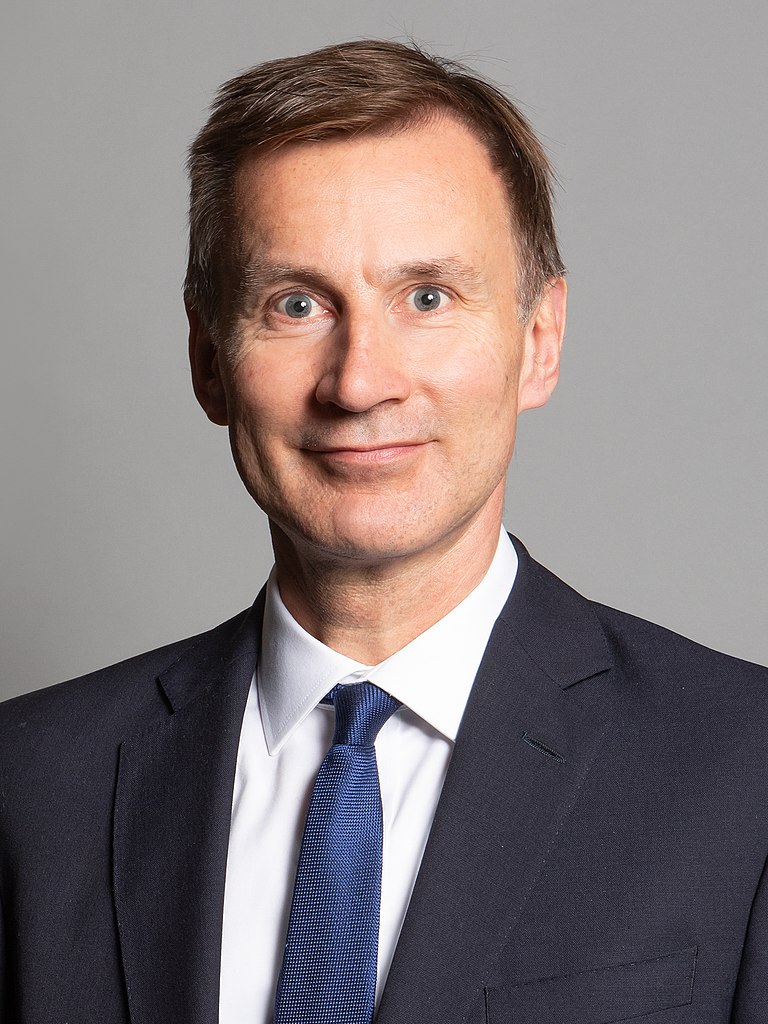
Jeremy Hunt is no stranger to Whitehall’s hard-tack and water.
As the longest-serving secretary of state for health, most of it during a period of post-banking-crisis, austerity, he well knows the problems it creates.
Not enough money means you can’t train enough people, pay them well enough. Build enough, repair enough, invest enough.
In the eight years before 2017/18 the NHS saw an average annual increase of 1.25% a year, when we all know it needs about 4% to balance its books.
The upshot…
… the wheels started to come off. Then, Covid arrived. We went into battle with 40,000 nurse vacancies and waiting lists of over 4m.
Now, heaven knows?
Inflation, unfunded wage increases, fuel costs, staff shortages of over 100,000 and…
… waiting lists so long that if all the patients were laid end-to-end, they’d reach from Kingston in London to Kingston Jamaica. It all adds up to a seven £billion hole in the finances.
Now Jeremy Hunt has moved into No11. Faced with austerity, all over again. And…
… as the de-facto PM, has to address the three P’s.
Party, Pensions and Putin.
The Conservative Party has collapsed. Internal governance and systems, out of date.
Mechanisms for choosing leaders are clunky, take way too long and have delivered, duds.
He dare not risk an election. He’d see Conservatives annihilated. They have to focus on self-interest but find a way of making it look like the public interest.
Still torn by Brexit, immigration and no real idea what to do.
Next, pensions. Arcane financial structures have forced the Bank of England to intervene into the UK Bond market, underlining the turmoil caused by Tizzy and Kamikaze. Pension schemes came close to running out of cash.
The upshot, a £65billion hole in the nation’s finances.
Finally, Putin. He isn’t going to calm down any time soon. When we’ve sent the last bullet in the MoD’s warehouse, to Ukraine, we’ll have to find the money to make more.
The up-shot… I doubt the oil and gas prices have finished doing their thing and inflation is rampaging.
OPEC+ is producing less than its target amount. A barrel of crude oil is around $88 a barrel, an 11% increase since the end of September. It suits the producers very nicely.
Protecting households from that lot, for the duration of another year or two, of war? Almost certainly we’d melt the printing machine at the Bank of England.
That’s why, now, we have an addition to the pantheon of game theory;
Hunt’s Dilemma; how to do the most good for, the least harm.
He can’t borrow, it’s too expensive.
He can’t raise taxes because of the political ramifications and public attitudes.
He can’t cut public services because, for the most part, they are focussed on the needs of the people who need them the most.
D’ya know what? My guess… he’ll do all three. Borrow, burgle and bash.
Borrow; debt as a percentage of GDP is 102.8%, but there is headroom compared to G7 member states. However, only Spain has had a bigger change in government gross debt.
Burgle? He has to go where the money is; income tax, National Insurance contributions and VAT, together, raised over £530 billion in 2021/22.
Bash-n-squeeze public services. Greater efficiency? Yes, always possible but not when there is a £7bn hole to fill in the NHS finances.
NHSE have to be ready to tell him what they intend to stop doing. The biggest cost centres are staff and treatments. Cut them and waiting times go up…
What’s the best advice for Jeremy?
Leave the NHS alone. Give them a three year certainty on their budget, (whatever it is) and leave them to deliver a relentless focus on waiting, which is a political time-bomb and the only thing the public care about.
And… stop thinking of Trusts as cost centres.
NHS Trusts and surgeries can be anchor institutions;
- often the biggest local employer,
- widening access to work,
- training, apprenticeships and good jobs;
- they could shift part of NHS’ £30bn a year, procurement volumes, to locality purchasing;
- partner business development and innovation;
- provide a community focus for organisations and clubs;
- and lead environmental sustainability.
The 4th P, Jeremy… worth a punt.
News and Comment from Roy Lilley
Contact Roy – please use this e-address roy.lilley@nhsmanagers.net
Reproduced at thetrainingnet.com by kind permission of Roy Lilley.
Related
Discover more from The Training Network
Subscribe to get the latest posts sent to your email.