I want what I want.
Not in the context of a tantrum or stamping my feet.
I just want what I want.
If I fancy a pint, I’ll go to a pub. A pasty, Gregs. A cuppa-builders… I’ll give the coffee shop a miss and find a greasy-spoon.
I know why I go to Waitrose and why I might visit Lidl.
I know what I want. Where to find find it. I know what I’ll get from a Jermyn Street tailor and I know I won’t get it from Marks and Sparks.
I know, the floor staff in John Lewis are about as good as it gets. I don’t expect it in H&M.
I know there are somethings I used to expect and these days… well, don’t hold yer breath.
A chat with a bank manager was something to value. Now, if you can find a bank, an appointment with an ‘advisor’ is about all you’ll get… and if you do, they’re so tied up in regulation and money laundering you’ll come away feeling like a criminal.
But…
… a banking app, where you can shuffle yer money, from the comfort of a sofa, is a lot better than queueing up, to cash a cheque.
I know, it’s about money, the cost of staffing, overheads and all the other impedimenta of modern life that changes things and passes for progress.
I am the person who remembers groceries delivered by a boy on a bike and green-grocery chosen, door-to-door, from the back of a horse and cart.
I am now the person who has a meal delivered by a boy on an electric bike and the closest I get to a horse is a visit to Ascot.
I’m not hankering for the past. I do not think the world would be better going backwards. I just like knowing where I stand. What I can expect.
If I’m unwell, undiagnosed and worried, I go to the NHS and expect to see a doctor. I do not want to reveal-my-all to a navigator or a patient advisor.
As charming as these nice people are, they are not regulated and my confidentiality hangs by a slender thread that may or may not connect to a confidentiality clause in their contract of employment… which in any case, I would be unable to enforce.
I am also dependent on their interpretation of my muddled explanation of what ails me. They may think my lower-back-pain is something for a physiotherapist to resolve.
The physio, as clever and well trained as they are, can seldom prescribe. I think only about 3% in the whole of the NHS. Advanced, first-contact-practitioners, who enjoy autonomy in practice… only 3,000 across the whole service.
The goal of providing comprehensive FCPs is set for this year and will be missed.
I might be directed to a pharmacist, who will have spent their early years submerged in study and learning. Alas, few of them will be taught the art of diagnosis and fewer still (less than 4,000 in the whole of the NHS) will be able to prescribe the drugs they dispense.
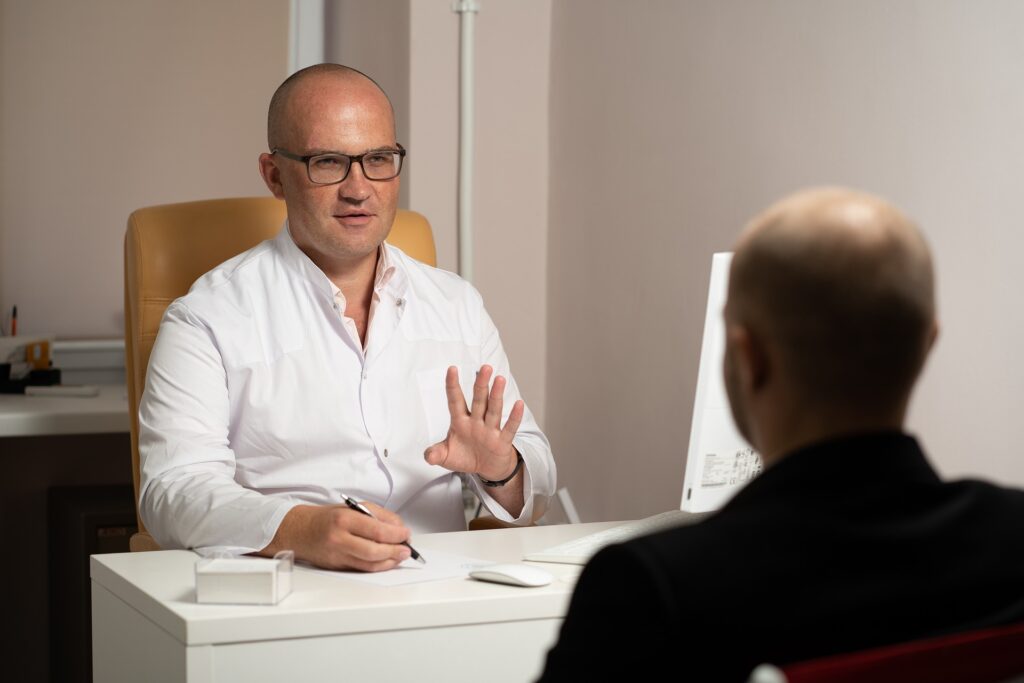
If I’m ill I first want to speak to a doctor. I do not want to speak to an assistant doctor or someone masquerading by design or cunning or accident, as a doctor.
Optimal interventions are made by shifting the physician-patient-contact to the earliest process. If it’s true in A&E, it is certainly true in primary care.
It is not that I have any feud or row with any of these professionals. I do not wish to pronounce any calumny on their abilities, or intent.
It’s just, if I want to talk to a doctor that’s what I want.
Is there any possibility people arranging healthcare, instead of weaving excuses, dissembling, arguing with each other, being creative with narratives and bull-$£!££!@& me, could stop pretending I’m stupid?
Is there any chance regulators might understand it?
I think it’s called being patient focussed.
Only a doctor is a doctor. Everyone else will be expert, smart, professional and qualified but an undiagnosed me… just wants to see a doctor.Is that too much to ask?
News and Comment from Roy Lilley
Contact Roy – please use this e-address roy.lilley@nhsmanagers.net
Reproduced at thetrainingnet.com by kind permission of Roy Lilley.
Related
Discover more from The Training Network
Subscribe to get the latest posts sent to your email.